
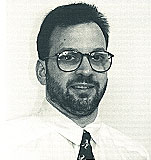
James DiMaria came to Richard Dennis with more market experience than most of his fellow Turtles. He had worked in the futures and securities industries since 1976, traded commodity futures at the Mid-America Commodities Exchange in Chicago, and was working as an analyst for Mid-Am Options when Dennis selected him in January 1985 as one of the original Turtle cohort. After the program ended in June 1986, he returned to trading on his own and founded JPD; one of the few original Turtles to keep trading professionally under his own firm.
DiMaria’s take on what the Turtle name means: over the long run, we’re going to win.
The Home Run Theory
DiMaria’s most valuable contribution to the public record of the Turtle experiment is an analogy drawn from baseball statistics. From his home page:
The origins of the Turtle nickname are as obscure as the selection process, though DiMaria advances the notion that the moniker means over the long run, we’re going to win. In 3 1/2 years as a Turtle, DiMaria’s trading results proceeded in fits and starts, and over the long run he came out ahead.
Jim DiMaria learned an important trading principle in the less lucrative arena of baseball statistics: The players who score the most runs are home run hitters, not those with consistent batting records.
It’s the same with trading, DiMaria says. Consistency is something to strive for, but it’s not always optimal. Trading is a waiting game. You sit and wait and make a lot of money all at once. The profits tend to come in bunches. The secret is to go sideways between the home runs, not lose too much between them.
That last sentence is the whole game. Most traders focus on finding more winners. DiMaria’s insight is that the question is what you do between the big trades, whether you bleed out slowly or hold position until the next trend arrives. A system that produces 40% of its annual return in two weeks of a given year is not broken during the other 50 weeks. It is waiting.
This maps to how trend following systems perform in practice. Returns are not linear. They cluster around the periods when large macro moves occur; commodity supercycles, currency crises, interest rate inflection points. The discipline required during the flat periods is what separates traders who capture those moves from those who abandon the system before the move arrives.
More on James DiMaria
Checking in With ‘Turtle Traders’ 30 Years Later by Yolanda Perdomo:
The Eddie Murphy comedy “Trading Places” celebrates its 30th anniversary this summer. The box office hit explored whether a person who has no formal training can make millions in the markets. The two main characters, Mortimer and Randolph had two counterparts in Chicago traders William Eckhardt and Richard Dennis. Dennis reportedly made his first million by the age of 25. A few months after the movie hit theaters, Eckhardt and Dennis put an ad in the newspaper looking for new talent.
“The ad looked like the New York Yankees looking for a starting shortstop,” Michael Cavallo said. He was already in commodities, for the beverage department at General Cinema. But the idea of working with Dennis was on a whole other level. The ad read something like this: a group of applicants would be trained in Dennis’ proprietary concepts, trade only for him and get a percentage of the profits.
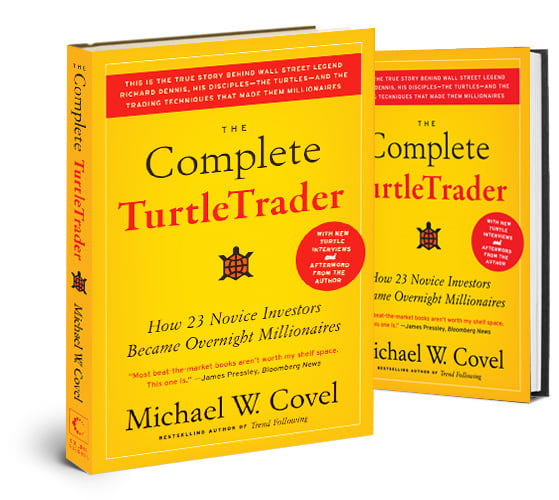
Chicagoan Jim DiMaria was among those picked. DiMaria says he got an $18,000 draw. “That was enough to pay my grocery bills and I knew that was going to be secure,” DiMaria said. The name turtle came from Dennis, who thought he could train traders as fast turtles were raised in farms. Michael Covel is the author of The Complete Turtle Trader. He says Dennis and Eckhardt believed the markets were a reflection of people and their decision-making or their human behavior.
“If a market was moving up, you want to be following that trend, if it’s going down, you want to be following that trend and the idea being if the market is moving down, you’re shorting the market to make money if the market drops,” Covel explained. Dennis and Eckhardt took around 20 people: about half with no business background. Michael Carr is a Wisconsin native who worked for the company that created Dungeons and Dragons. Carr and the other Turtles had three and a half to four years to make money after two weeks of training. He says part of the recruiting process included answering personality questions like “how important is money to you and why? and ‘would you rather be good or lucky?'”
Carr, Cavallo and DiMaria won’t say how lucky they were. But they didn’t lose money. But not all of the Turtles made money. Several were dropped early in the program. Richard Dennis and William Eckhardt declined to be interviewed for the story. DiMaria would describe the experiment as a success. “If this were in fact the dollar bet (like the one made in Trading Places), which is the theory, (then, yes) can trading be taught…but maybe not to just anyone,” DiMaria said. Michael Covel says the lessons learned from the Turtle Traders continue today. “I think they’re seen as visionaries and very successful traders,” Covel said. Today, Cavallo is in Massachusetts and works for the Clinton Foundation. Carr is a freelance writer in Wisconsin. DiMaria is still trading with his own firm.
Additional Articles
- The Life Blood of Chicago by M. Corey Goldman
- Investment Special: The Trend is Your Friend by Tim Price
Trend Following Systems
Want to learn more and start trading trend following systems? Start here.
